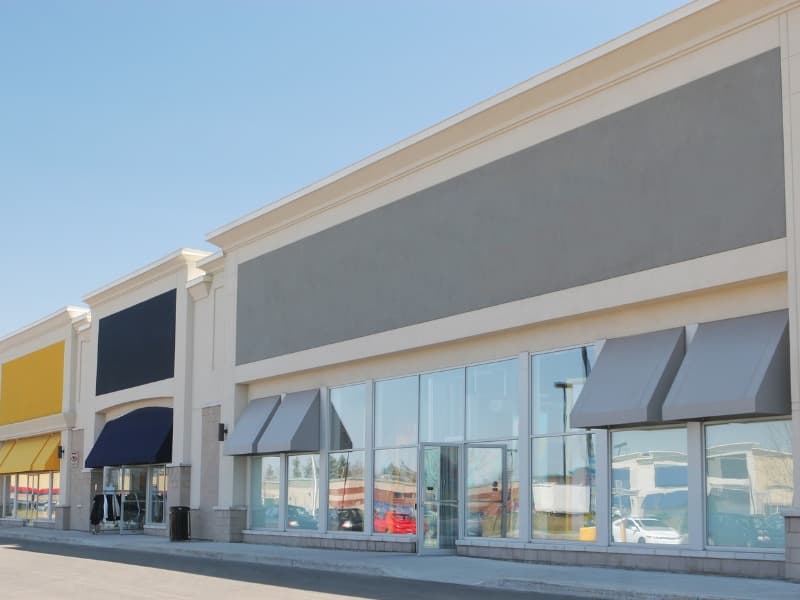
Strip Malls
Multi-tenant neighborhood retail centers anchored by essential service tenants with strong foot traffic and community-driven demand.
Data as of Q4 2025 · Sources: CoStar, CBRE Research, Moody's Analytics
Key Metrics
Market Overview
Strip malls and neighborhood shopping centers represent one of the most accessible and resilient segments of commercial real estate.
These multi-tenant properties typically range from 10,000 to 100,000 square feet and are anchored by essential service tenants such as dollar stores, grocery outlets, quick-service restaurants, salons, and tax preparation firms. Unlike regional malls, strip centers benefit from convenience-driven foot traffic and lower construction costs per square foot. The tenant mix in a well-performing strip center typically breaks into three tiers. National anchors like Dollar Tree, Subway, Pizza Hut, and GameStop draw baseline foot traffic and lend credibility to the center. Regional chains like Firehouse Subs, Jersey Mike's, European Wax Center, and Goldfish Swim School fill mid-range inline suites and bring brand recognition with slightly higher rents than local operators. Local and independent tenants round out the roster: nail salons, barber shops, insurance agencies, tax preparers, dry cleaners, tutoring centers, dentists, chiropractors, and ethnic restaurants. These local operators often sign longer initial leases because they invest heavily in buildouts and have fewer relocation options. Local service tenants are the backbone of strip center income stability. Businesses like hair salons, dental offices, urgent care clinics, pet groomers, martial arts studios, laundromats, and independent restaurants are structurally resistant to e-commerce. A customer cannot get a haircut, a teeth cleaning, or a karate lesson delivered to their front door. This gives strip malls a defensive moat that enclosed malls and big-box retail lack. Service tenants also generate repeat visit patterns, with customers returning weekly or monthly, which supports foot traffic for neighboring tenants and strengthens the center as a whole. Investors value strip malls for their diversified income streams across multiple tenants, reducing single-tenant concentration risk. Cap rates in this segment range from 6.25% to 7.50% depending on anchor quality, location demographics, and lease structures, offering attractive yield premiums over single-tenant NNN retail.
Top 100 Tenants by Portfolio Size
Recent Market Deals
Market Outlook
The strip mall sector is experiencing renewed investor interest as the asset class benefits from several converging tailwinds. Service-oriented tenants continue to expand, with quick-service restaurants, medical clinics, pet services, and fitness concepts driving inline leasing demand. The limited new supply of neighborhood retail, combined with population growth in Sun Belt and suburban markets, is tightening vacancy rates and pushing rents higher. Institutional investors who previously focused exclusively on single-tenant NNN are now allocating to well-located multi-tenant strips for the yield premium and diversification benefits. Cap rate compression of 15-25 basis points is expected through 2026 as transaction volume increases and buyer competition intensifies. The biggest risk factor remains anchor tenant credit quality, particularly for centers reliant on discount retailers facing margin pressure. Investors should focus on centers with strong service-tenant mixes in growing suburban trade areas with favorable demographics and limited competing supply.
Key Investor Tips
Related Research
Data and analysis on this page are for informational purposes only and do not constitute investment, financial, or tax advice. Statistics may be estimated from publicly available sources and should be verified with primary data providers before use in investment decisions. Tenant information is sourced from public filings and may not reflect current conditions. Past performance does not guarantee future results.